
FDI in drugs and pharmaceuticals was $487 million during April-August 2012, according to the latest data of the Department of Industrial Policy and Promotion.

The Centre has finalised sweeping changes to the country's foreign direct investment (FDI) policy to account for increasing concerns voiced by security agencies.
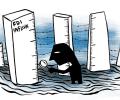
A series of steps taken by the government to promote ease of doing business and liberalisation of foreign direct investment norms have helped India receive record FDI inflows so far this year, and implementation of measures like PM Gati Shakti, single window clearance and GIS-mapped land bank are expected to further push investments in 2022. Notwithstanding the global slowdown and the COVID-19 pandemic, total foreign direct investments into India rose to a record $81.72 billion in 2020-21. During April-July this fiscal, FDI (foreign direct investment) into the country increased by 62 per cent to $27.37 billion.

28 private sector companies are having FDI varying up to 26 per cent.

The government is considering to tweak FDI policy in retail sector so as to allow global chains like Walmart, Carrefour and Tesco to open multi-brand stores in non-hilly cities with population less than one million.

Domestic traders body CAIT on Thursday claimed that e-commerce major Amazon's plan to acquire Prione Business Services - its joint venture firm with Catamaran - will be a violation of foreign direct investment policy. Amazon has said it will acquire Prione Business Services, subject to requisite regulatory approvals. In August, Amazon and NR Narayana Murthy's Catamaran had announced that they will not continue their joint venture Prione Business Services beyond May 2022.

A section of traders and hawkers today staged protests in various parts of the country against the government's decision on FDI policy in multi-brand retail, the Confederation of All India Traders (CAIT) said.

According to sources, there is a proposal to allow 100 per cent Foreign Direct Investment in single brand retail sector "through automatic route" with certain conditions.

Foreign direct investment (FDI) in India has declined by six per cent to $5.47 billion during January-March quarter of the current calender year even as government is making efforts to promote the country as an investment destination.

The Election Commission (EC) has raised certain questions on the government's proposal to allow foreign direct investment (FDI) in the construction and maintenance segments of the railways.

The Indian insurance industry is set to focus on customer-centric technological adoption and expansion into rural areas to drive growth in 2025.
The government will soon announce a major liberalisation in foreign direct investment policy, hiking the threshold limit in many of the ground handling and support services to 100 per cent.
India on Tuesday mooted a marketing policy for the sector though domestic players opposed any move to allow overseas investments in the retail space.

Gandhi had, on April 12, flagged the issue of alleged takeover of some Indian companies after those became vulnerable in the wake of the economic slowdown.
Government may allow foreign direct investment in "branded and dedicated retail segment" in an attempt to boost investment in employment generating sectors.

Access to India's defence market must be made conditional -- available only to those who are ready to make a long-term commitment in India, argues Ajai Shukla.
The industry is counting minutes and hours in the run-up to the Parliament session on Wednesday, as finance minister Pranab Mukherjee has said any announcement would be made in the House.
Towards the close of 2013, the finance ministry approved the proposal of UK-based Tesco to invest $110 million in opening up of multi-brand retail stores in the country in partnership with Tata Group firm Trent.

Local traders are evaluating other options rather in FDI.
The government said on Thursday said it will make it clear within 10 days whether foreign players be allowed to hold stake in stock exchanges or not.

The government on Saturday made its prior approval mandatory for foreign investments from countries that share land border with India to curb 'opportunistic takeovers' of domestic firms following the COVID-19 pandemic, a move which will restrict Foreign Direct Investment from China.

Currently, 100 per cent FDI is permitted in brownfield pharma firms through clearance from the Foreign Investment Promotion Board.

High frequency indicators, like vehicles sales, air traffic, steel consumption and GST E-way bills, point towards a sequential pickup in momentum of economic activity during the second half of the fiscal 2024-25 and sustain moving forward, RBI Bulletin said on Wednesday. However, a strong dollar, driven by US economic resilience and trade policy pivots, could exacerbate capital outflows from emerging economies, push risk premiums higher, and intensify external vulnerabilities, said an article on 'State of the Economy' published in RBI's February bulletin.
In June 2012, the country had received FDI worth $1.24 billion.

Foreign Direct Investment into the country declined by about 38 per cent, year-on-year, to $2.91 billion in September, according to the Department of Industrial Policy and Promotion.

There has been a decline in foreign direct inflow from China in the last three years, with FDI coming down to USD 163.77 million in 2019-20, Minister of State for Finance Anurag Singh Thakur informed the Lok Sabha on Monday. Giving details of the total foreign direct investment (FDI) inflow from Chinese companies in India, he said, it was USD 350.22 million in 2017-18, while it declined to USD 229 million in the following year.

India already allows 100 per cent ownership of greenfield pharma businesses.
With former Uttar Pradesh Chief Minister Mayawati voicing certain reservations over FDI policy in its present form, the government on Monday sought to keep the Bahujan Samaj Party in good humour by declaring its commitment to a Constitution Amendment Bill providing for promotions for SC/STs in government jobs.
'An explanation perhaps lies in the culture of revisions that has grown deep roots in the government data collection system,' notes A K Bhattacharya.

As per the current policy, 100 per cent foreign investment is allowed in scheduled air transport service, domestic scheduled passenger airlines and regional air transport

The ministry of home affairs has received more than 20 proposals for foreign direct investment (FDI), including from China and Hong Kong, requiring security clearance between April and May. 'We are vetting some of these proposals which have come from various sectors. One of the applications is from a well known start-up,' an official said. 'We await inputs from Research and Analysis Wing, intelligence agencies, external affairs ministry, and embassies.'


A panel led by the secretaries of the DEA and the DIPP would conduct a quarterly review on the pending proposals.

The other sectors where inflows have declined include pharmaceuticals ( $680 million).

Tesco was the first global retailer to apply for multi- brand retailing in India.

Asking the government to tweak FDI norms in multi-brand segment, retailers said sourcing rules must be made similar to that of single brand while demanding foreign firms be allowed to put only 50 per cent of first tranche of investment in back-end infrastructure.

FDI in the defence sector during 2000-2014 has been a meagre $4.94 billion, despite the total FDI flow into the country across sectors standing at $321.81 billion.

In a major policy reversal, the AAP government wrote to the Centre to withdraw the approval given by the previous Sheila Dikshit government for FDI in multi-brand retailing in Delhi, saying the entry of global chains such as Walmart and Tesco in India would result in large-scale job losses.

In the aviation sector, 100 per cent FDI is allowed under automatic route for MRO (maintenance, repair, overhaul), ground handling, and aircraft purchase.
 © 2026 Rediff.com - Advertise with us - Disclaimer - Privacy Policy - Sitemap - Feedback - About us - Terms of use - Grievances